Renewable Farming

Main News Stories

Is there a link between lung diseases and molds in harvest dust?

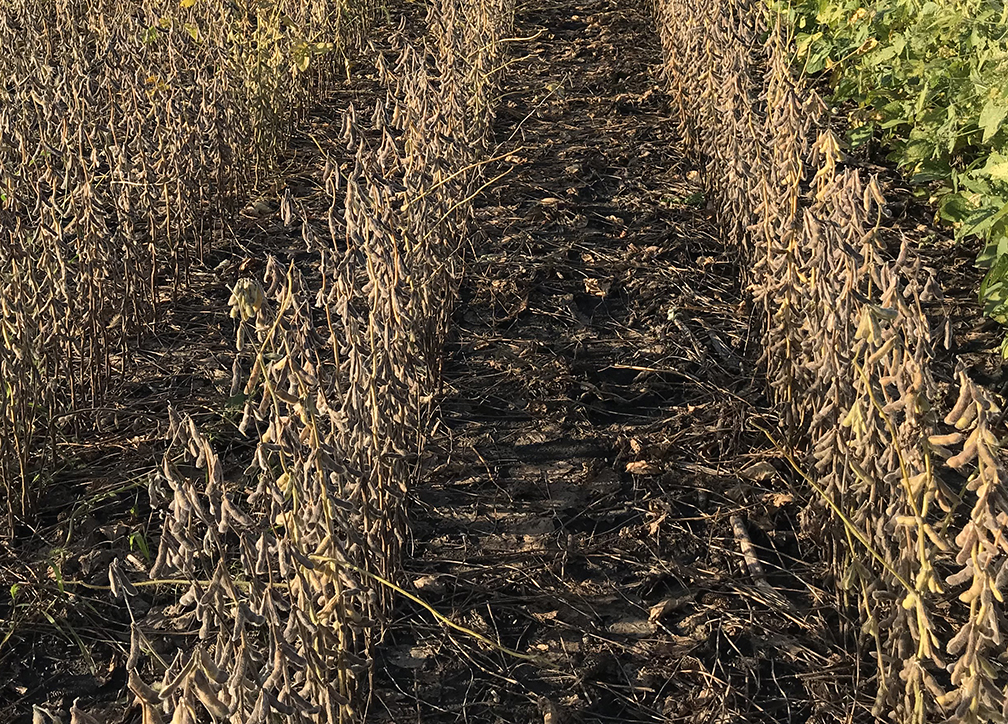
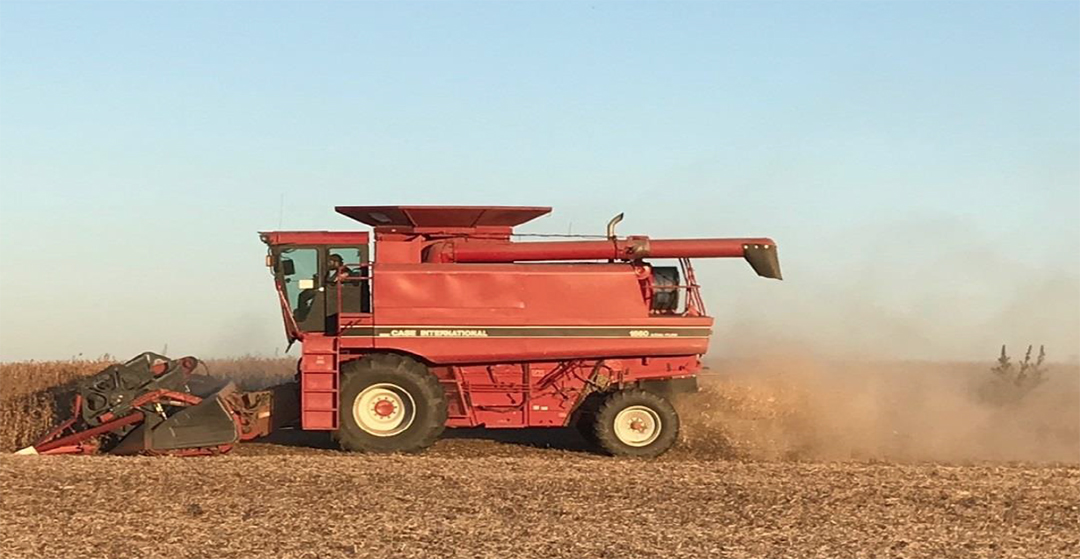
Darker shades of color in corn and soybean fields offer evidence that persistent rains which delayed harvest have also multiplied an array of molds. And for the first time, a farmer has sent us visual evidence from running combines that GMO soybeans shed more dust — and molds — than non-GMO beans.  October 23, 2018 — […]

Is there a link between lung diseases and molds in harvest dust? Read More »
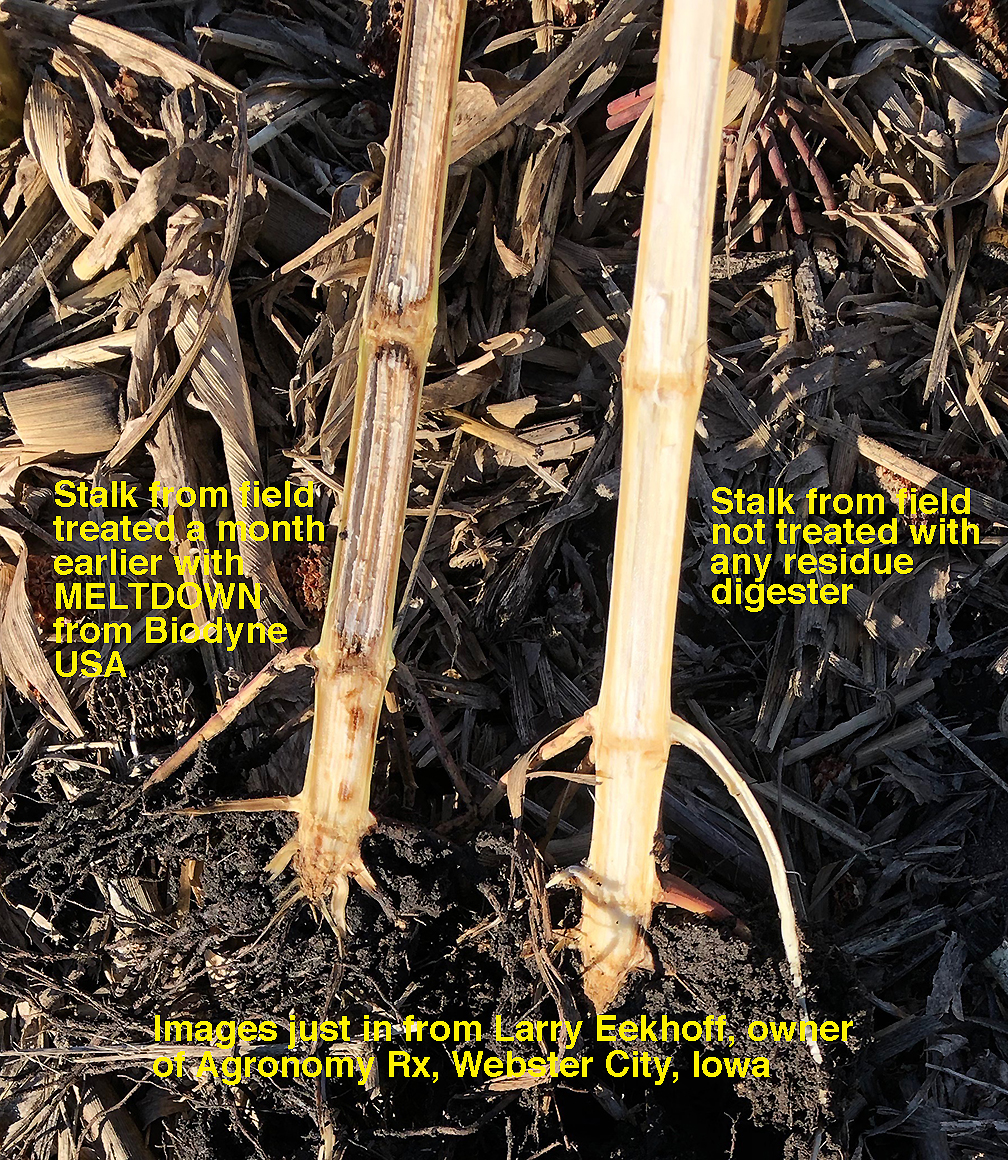
A revealing reason to split stalks after harvest, as well as early in the growing season

We’ve always encouraged corn growers to look inside cornstalks in spring, from about the four-leaf stage on, to detect early signals of brown, rotting gunk in the xylem tubes near the root crown. That’s a barometer of season-long root health, thus showing the stalk’s ability to transport water and nutrients to leaves and kernels. October 18,

A revealing reason to split stalks after harvest, as well as early in the growing season Read More »

What nutrient does your corn need — in the largest amounts — through the growing season?

Many corn growers will probably answer, “nitrogen.” That’s because we’ve been conditioned by nearly a century of mineral fertilizer research and marketing to think nitrogen, phosphorus and potassium. But the correct answer is carbon. Crops extract carbon from carbon dioxide, the compound which our United Nations officials branded a pollutant, and convinced the U.S. Supreme

What nutrient does your corn need — in the largest amounts — through the growing season? Read More »

How Dave Schwartz achieves the classic corn-grower’s goal: Mature ears on green stalk

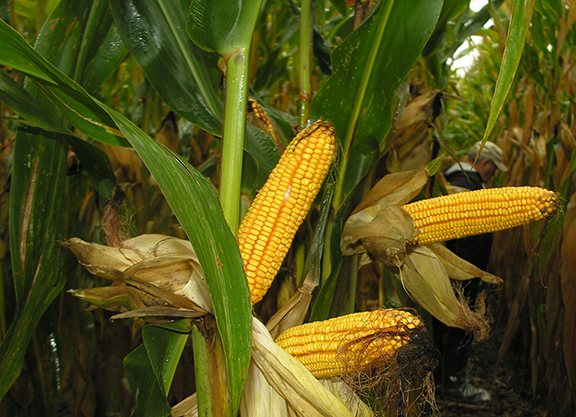
Healthy, 300-bu. plus corn on rolling hillsides with a corn suitability rating in the mid-50s? See the photos below taken at the Dave Schwartz farm a few miles west of Guthrie Center, Iowa. October 13, 2018 — The photos below were shot Oct. 1 by crop consultant Bob Streit of Boone, Iowa. He and Dave

How Dave Schwartz achieves the classic corn-grower’s goal: Mature ears on green stalk Read More »

Farmers fighting stalk rot see major benefits from biologically healthy soil

The rivers of rain which lashed much of the upper Midwest in September and early October spawned an array of stalk rot fungi and bacteria which are now threatening substantial corn yield losses. Here’s a tool you can use this fall — soon as possible — to keep corn alive longer in future years. The final 40 bu. or

Farmers fighting stalk rot see major benefits from biologically healthy soil Read More »

Geneticist who created GMO potatoes for J.R. Simplot urges: “Take them off the market.”

Caius Rommens, a genetic engineer who first worked at Monsanto and then for J.R. Simplot, published an editorial today on the Independent Science News website saying that he “renounces” his development work at Simplot and urges that the genetically altered potatoes he personally developed for that firm “should be withdrawn from the market.” October 8, 2018

Geneticist who created GMO potatoes for J.R. Simplot urges: “Take them off the market.” Read More »

First-ever audit of raw climate data discredits long-claimed “man-made global warming”

Australian researcher John McLean conducted an exhaustive audit on the key long-term climate data which the Intergovernmental Panel on Climate Change uses for its “consensus” on man-made global warming. He found the data has been severely corrupted and manipulated. His conclusion: Today’s “consensus” of man-made world warming is built on an unreliable foundation. It’s a shaky base from

First-ever audit of raw climate data discredits long-claimed “man-made global warming” Read More »

Waves of late rains offer opportunities for faster biological breakdown of stalks

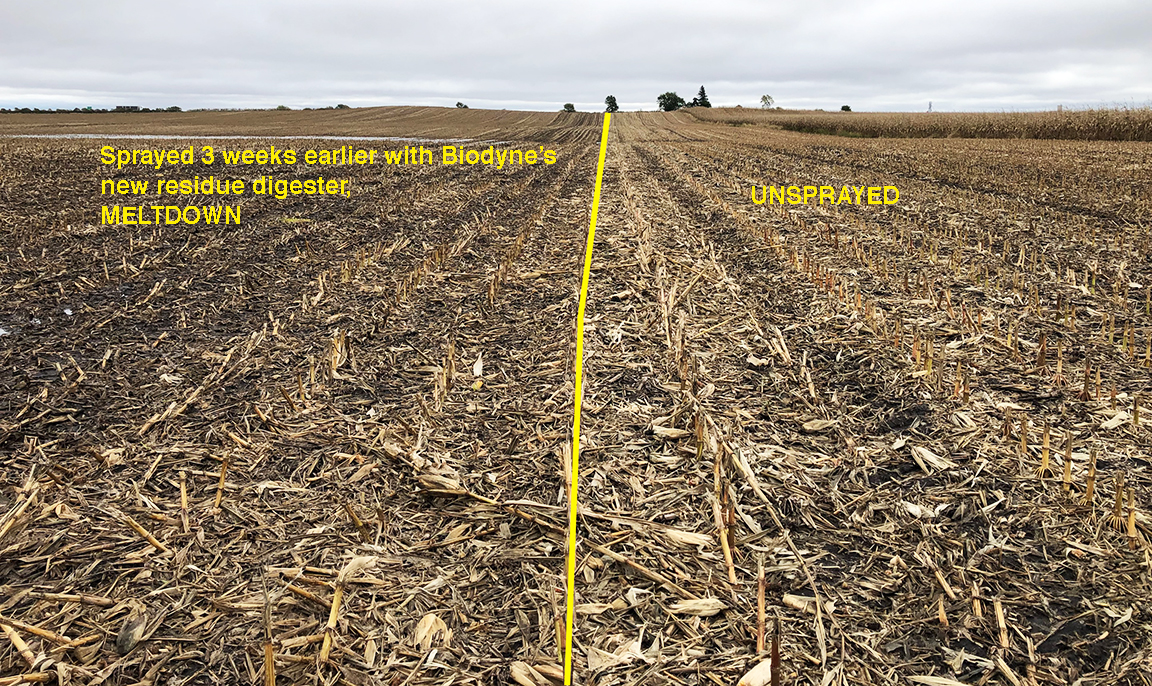
Several new stalk residue digester products are emerging in the marketplace. Your decision may well be not deciding whether to speed residue breakdown, but “which one is best?”  Farmers’ demand is demonstrating their effectiveness. Although a strong cover-crop program also enhances your microbial diversity, the tonnage of cornstalks still presents a challenge. September 27, 2018 — Many fields in the

Waves of late rains offer opportunities for faster biological breakdown of stalks Read More »

Prairie Farmer’s Christy Lee takes point on dicamba drift’s widening threat

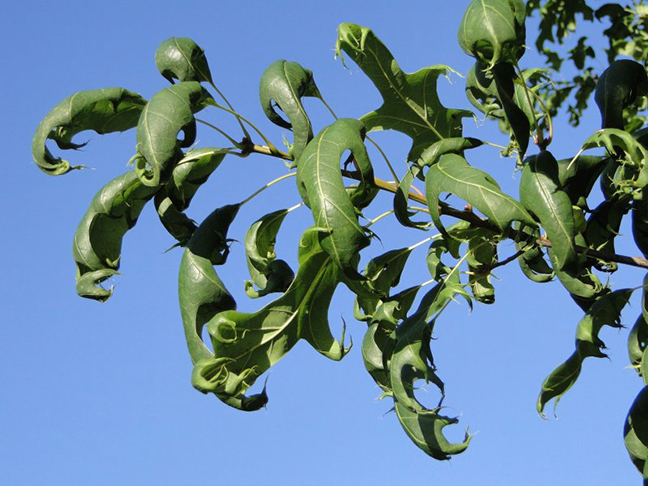
Advertising-supported farm magazines have long taken a… well, a tactful approach to reporting the damage potential of ag chemicals. But this week, Prairie Farmer courageously focused directly on the huge challenge dicamba herbicides face because of damage to high-value crops and urban environments. Sept. 23, 2018 — Christy Couch Lee’s feature published two days ago, “Orchard growers raise

Prairie Farmer’s Christy Lee takes point on dicamba drift’s widening threat Read More »

Do your fields have a problem with flooding… drought… or just rain infiltration?

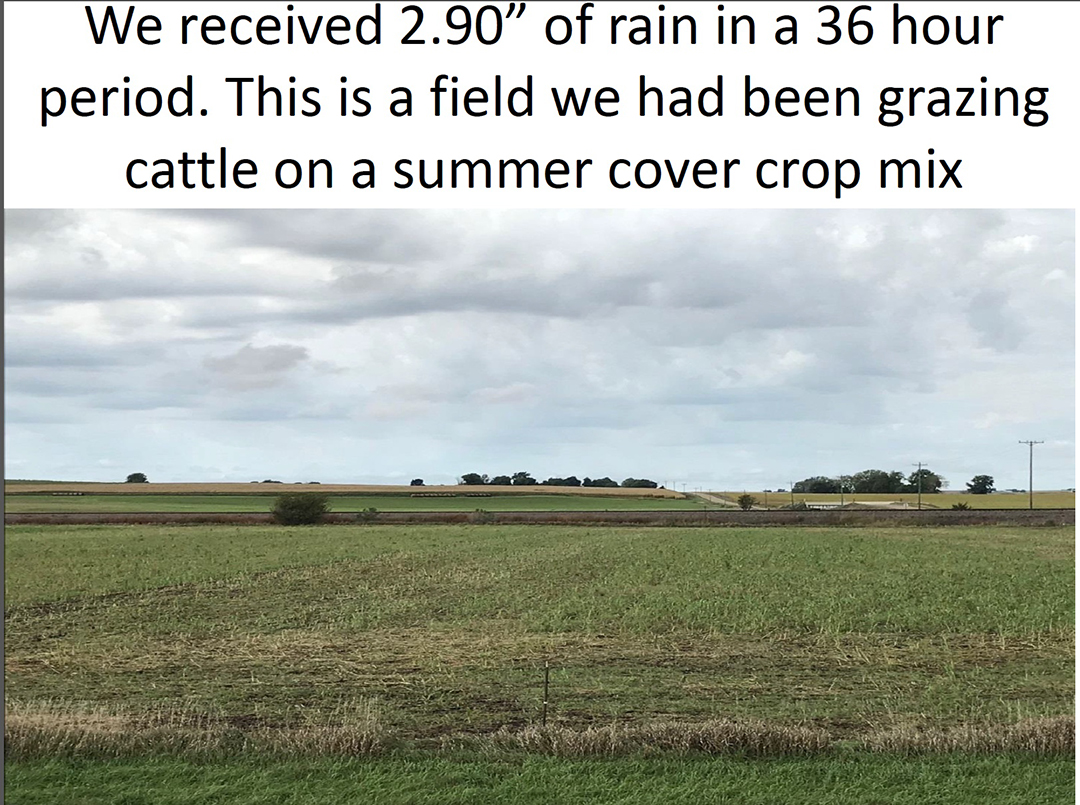
Here’s a series of seven photos which farmer Howard Vlieger shot at his farm, and e-mailed us Sept. 17. They show the dramatic difference in soil absorption between his biologically managed and cover-cropped fields, compared with neighboring “conventionally” tilled fields. September 22, 2018 — Howard Vlieger’s e-mail handle is “studentofthesoil.” That’s the way his family has farmed for years. And

Do your fields have a problem with flooding… drought… or just rain infiltration? Read More »